
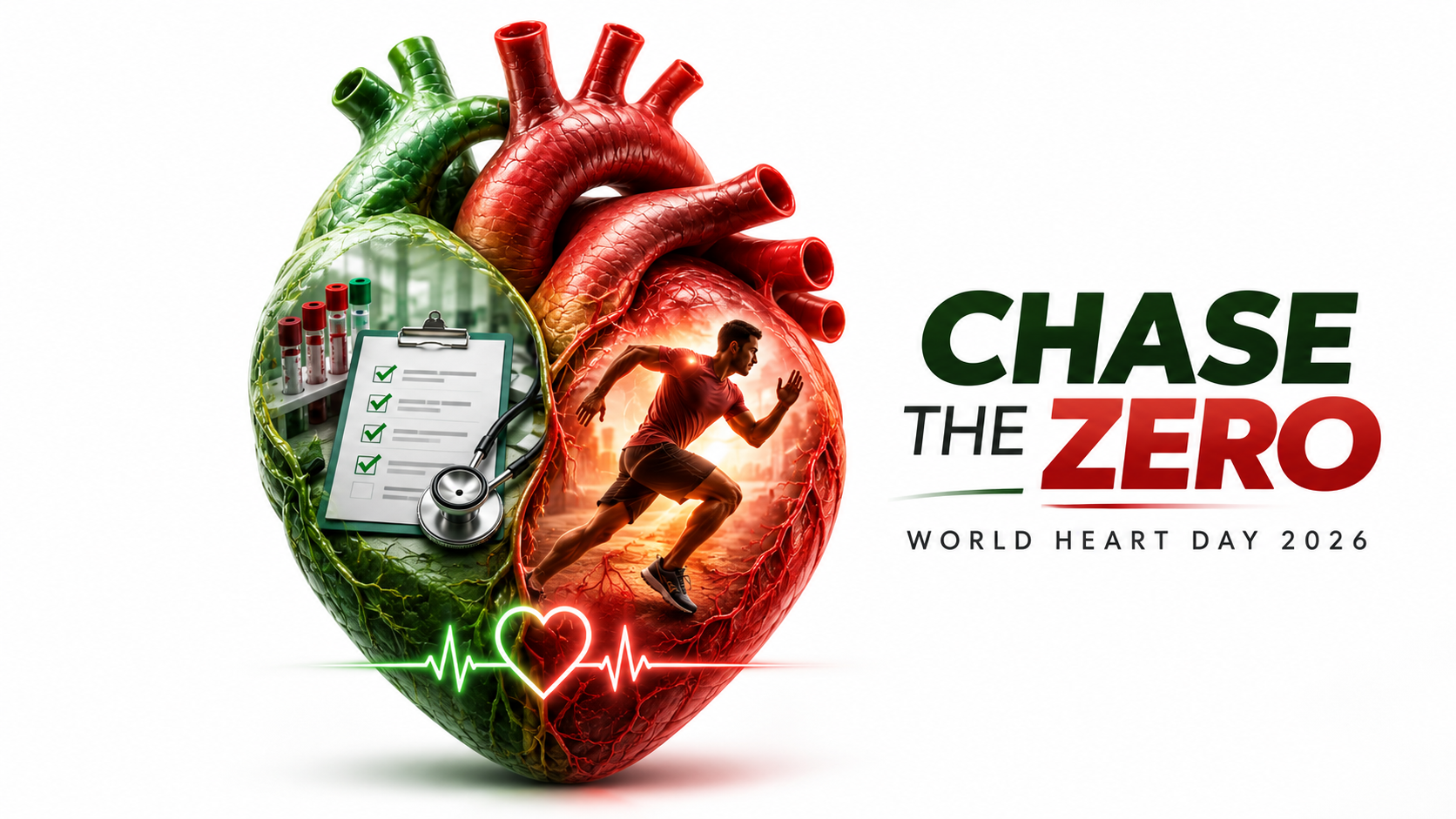
Two people might show similar heart numbers, but one has trouble with stairs and the other stays active. That mismatch between test results and daily movement is what drove our World Heart Day 2026 campaign.
Chase the Zero was Oxymed Hospital’s World Heart Day 2026 push. It was about learning heart health basics. It covered prevention, daily movement, and getting ahead of heart risks. We also highlighted proactive cardiovascular care.
A big focus was functional mobility. We wanted people to know how their bodies work in real life. The Functional Mobility Test, or FMT, became the main theme. Our key line was: Know Your Numbers. Know Your Movement. We asked people to check their heart-related measurements. We also asked them to pay attention to how they exercise and how they function each day.
Heart health is more than what a paper says. The heart and blood vessels help you handle movement. When someone walks, works out, or takes stairs, the body asks for more, and the cardiovascular system responds.
The campaign made people consider these questions. Do I know my numbers? Do I know how I move and function?
The connection: Heart health → physical capacity → movement → functional ability → quality of life.
FMT, or Functional Mobility Test, checks how someone moves and how much physical work they can do. It helps show how well a person can move and handle everyday movement tasks. In Chase the Zero, FMT put movement and physical capacity into the discussion about heart health. The test does not, by itself, diagnose heart disease.
ERCO (Exercise and Rehabilitation Centre) at Oxymed Hospital shows the exercise and rehab part of our plan. Exercise and rehabilitation help people build functional ability. That is a key part of cardiovascular care.
The link: FMT works from your mobility needs. ERCO backs stronger functional capacity with exercise and rehabilitation.
The campaign did not remain limited to hospital-based awareness. Oxymed took the message of movement and heart health into the community through two major activities.
September 26, 2026 was a Saturday. We held a World Heart Day awareness walk from 6:00 AM until 8:00 AM. The event took place at Besant Nagar Beach in Chennai.
People walked from the Besant Nagar Beach Police Booth to the Murugan Idli Kadai Police Booth.
Message: Step Today for a Healthier Tomorrow.
The Walkathon was graced by distinguished guests:
On September 27, 2026, the next day, we started the Chase the Zero Motor Bike Rally at 6:00 AM. We rode from the ECR Toll Gate to Mahabalipuram.
We relied on the motorcycling community to share a message about heart health. The focus was on prevention and the need to stay active.
Message: Ride Today for a Healthier Tomorrow. Every Ride Counts.
Mr. Arun R. Paarthiban, who leads Strategy at the Vels Group of Institutions, took part in the Motor Bike Rally and related campaign work. He helped share the heart-health message with people who ride motorcycles, and also with the broader community.
The Walkathon and the Motor Bike Rally helped people talk more about heart health in their own neighborhoods. Folks met them at the beach, on the road, and in other public spots. The events tied exercise to a clear health message. They showed that heart care starts with doing something, not just waiting. People took part in prompts to move more, lean toward prevention, and see that heart support is more than trips to the hospital. It is also about everyday choices that help you stay active and well.
I started with a functional mobility check. Then I helped shape a walkathon and a motor bike rally. Chase the Zero kept clinical ideas in the same space as real day to day movement.
The work also showed something simple. Heart health talks do not need to stay only in exam rooms. They can fit into what communities already do, like walking, exercising, and staying active.
The larger goal was to move people from awareness to action: understand their cardiovascular risk, pay attention to functional capacity, stay active, and seek appropriate medical advice when changes occur.
Chase the Zero brought together functional capacity, exercise, movement, prevention, and cardiovascular health. Heart health is not only about knowing your numbers, but also knowing your movement.
Different activities, one goal: a healthier heart and a more active community.
When was the last time you asked yourself both questions: do I know my numbers, and do I know how well I move?