
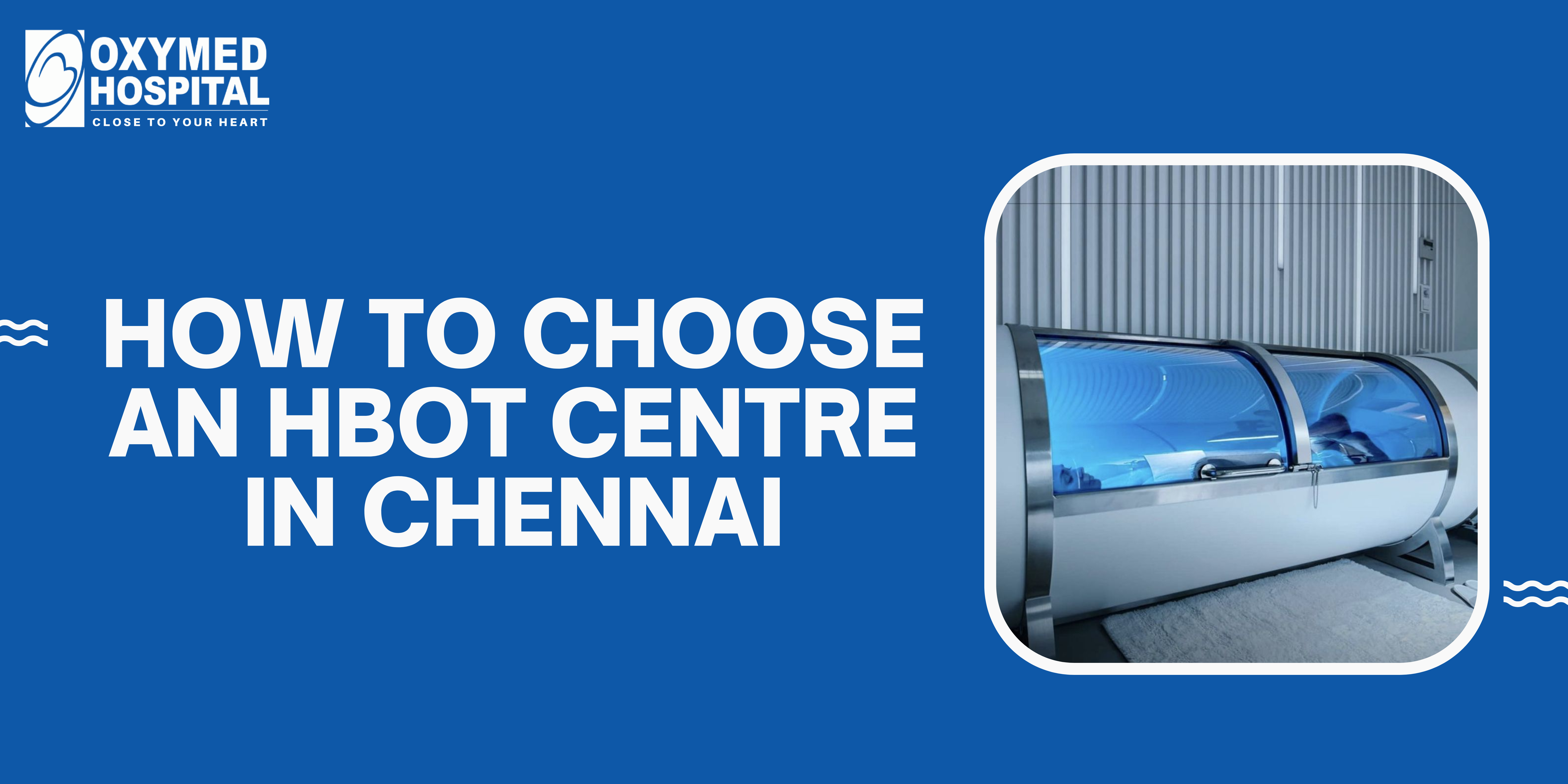
Hyperbaric Oxygen Therapy, commonly known as HBOT, is increasingly being used as part of treatment plans for selected wounds, infections, radiation injuries and other medical conditions.
During HBOT, a patient breathes oxygen inside a specially designed chamber where the pressure is higher than normal atmospheric pressure. This allows the lungs to collect more oxygen, increasing the amount of oxygen available to body tissues. HBOT is generally used as an additional treatment alongside conventional medical or surgical care rather than as a replacement for it.
However, choosing an HBOT centre should not be based only on advertisements, treatment prices or promises of faster recovery. Hyperbaric oxygen is a medical treatment involving high pressure and concentrated oxygen, so physician supervision, equipment safety, proper patient selection and emergency preparedness are essential.
Here are the most important factors to consider when choosing an HBOT centre in Chennai.
A responsible HBOT centre should not begin treatment simply because a patient requests it.
Before recommending HBOT, the medical team should assess:
Physician involvement is important because some patients may need additional monitoring or may have conditions that increase the risks associated with pressure or oxygen exposure.
The Undersea and Hyperbaric Medical Society emphasises the importance of physician oversight in hyperbaric medicine, including evaluating patients, determining monitoring requirements and being available to manage medical complications.
Ask the centre who will evaluate you, who will prescribe the treatment and whether a doctor will be available during your sessions.
HBOT has medically recognised applications, but it is not a universal cure for every health problem.
Evidence-supported uses may include selected cases involving:
The exact suitability of HBOT depends on the patient’s diagnosis, disease severity and overall treatment plan.
Be cautious if a centre promotes HBOT as a guaranteed treatment for an unusually long list of unrelated conditions. A reputable provider should clearly explain whether the proposed use is established, investigational or outside commonly recognised indications.
Patients should also be informed about conventional treatments and reasonable alternatives.
HBOT should ideally be provided in a setting where healthcare professionals can assess the patient and respond to medical concerns.
A hospital-based HBOT centre may provide easier access to:
This is particularly important for patients with diabetes, cardiovascular disease, lung conditions, serious infections or complex wounds.
HBOT is often only one part of a broader treatment plan. For example, a patient with a diabetic foot ulcer may also require blood-sugar management, wound cleaning, infection treatment, pressure relief, vascular evaluation or surgery.
Choose a centre that coordinates HBOT with the rest of your medical care instead of presenting oxygen therapy as a stand-alone solution.
Not every device promoted as a hyperbaric chamber provides the same type of treatment.
Ask the centre about:
The facility should follow the manufacturer’s operating instructions and recommended maintenance schedule.
The US Food and Drug Administration advises HBOT facilities to conduct appropriate safety checks, maintain their devices, follow cleaning procedures and prevent prohibited electrical or static-producing objects from entering the chamber.
The centre should be willing to explain the equipment in understandable language. Patients should not be expected to decode a catalogue of technical terms merely to discover whether the machine is maintained properly.
Operating a hyperbaric chamber requires more than switching on a machine and watching a timer.
The team should understand:
Ask who operates the chamber and what hyperbaric medicine training the staff have completed.
The FDA recommends ongoing staff training and proper supervision of patients throughout HBOT treatment.
Patients should have a reliable method of communicating with the medical team from inside the chamber. Staff members should remain attentive throughout the session rather than leaving the patient unmonitored.
Oxygen-rich environments carry an increased fire risk. Strict safety procedures are therefore essential in every HBOT facility.
Before entering the chamber, patients may be instructed to remove or avoid:
Approved clothing, often made from compatible materials such as cotton, may be provided by the centre.
The FDA specifically advises facilities to follow fire-prevention measures, ensure correct grounding, prevent prohibited devices from entering chambers and supervise patients throughout treatment.
A professional centre should provide clear safety instructions before the first session and repeat them when necessary.
HBOT is generally well tolerated when it is medically appropriate and administered by trained professionals. However, it is not entirely free from risk.
Possible side effects or complications may include:
The likelihood of complications varies depending on the patient’s health, treatment pressure and number of sessions.
A reliable centre should discuss both potential benefits and risks. Statements such as “completely risk-free” or “guaranteed recovery” should be treated cautiously.
There is no single HBOT schedule suitable for every patient.
The treatment plan may depend on:
Before starting, ask:
The number of sessions can vary considerably depending on the diagnosis and clinical response.
The centre should reassess patients rather than selling a large package of sessions without clinical review.
Treatment quality is not measured by the number of completed chamber sessions alone.
Depending on the condition, progress monitoring may include:
The centre should maintain medical records and explain how it will determine whether HBOT is helping.
For wound-care patients, HBOT should usually be combined with appropriate wound management and treatment of the underlying cause. Oxygen cannot compensate for uncontrolled diabetes, untreated infection or severely reduced blood flow all by itself.
Accreditation can help patients understand whether a healthcare facility has been assessed against recognised quality and safety standards.
In India, NABH develops quality and patient-safety benchmarks for hospitals and healthcare providers. Patients can ask whether the hospital has relevant accreditation and verify the current status through official sources rather than relying only on a logo displayed in promotional materials.
Hyperbaric medicine organisations such as the UHMS also maintain facility standards covering equipment, staffing, training, clinical care and safety.
A lack of one particular international accreditation does not automatically mean a centre is unsuitable, especially where regional systems differ. However, the centre should be transparent about the standards it follows and the credentials it holds.
HBOT costs in Chennai can vary depending on:
Do not choose a centre based only on the lowest per-session price.
Ask for a clear explanation of:
A trustworthy centre should explain the expected cost before treatment without making the patient feel pressured into purchasing a package immediately.
Many HBOT treatment plans involve repeated visits. Location and scheduling therefore matter, particularly for elderly patients and people with mobility difficulties.
Consider:
Choosing a conveniently located HBOT centre in Chennai can make it easier to complete the treatment plan consistently.
However, convenience should come after medical supervision and safety, not before them.
Use this checklist during your consultation:
A good medical team should answer these questions clearly and respectfully.
Think carefully before choosing a facility that:
Good healthcare communication should make patients better informed, not more confused or dependent.
Oxymed Hospital provides Hyperbaric Oxygen Therapy in Chennai as part of its medical services. Its HBOT facility is located in Nandanam, and the hospital states that treatment plans are tailored to individual health needs and coordinated by its medical team.
Patients considering HBOT can schedule a medical consultation to determine whether the treatment is appropriate for their condition. The medical team can evaluate the diagnosis, explain the expected treatment process and create a plan based on the patient’s health requirements.
To learn more or book an appointment, visit Oxymed Hospital.
Choosing the right HBOT centre in Chennai requires more than finding the nearest chamber or the lowest treatment price.
Look for a centre that provides:
HBOT can be valuable for selected patients, but its effectiveness and safety depend on using it for the right condition, under proper medical supervision and as part of a complete treatment plan.
Medical disclaimer: This article is for general patient education and does not replace consultation, diagnosis or treatment from a qualified healthcare professional. HBOT eligibility and treatment decisions must be made by a doctor after evaluating the patient’s individual medical condition.