
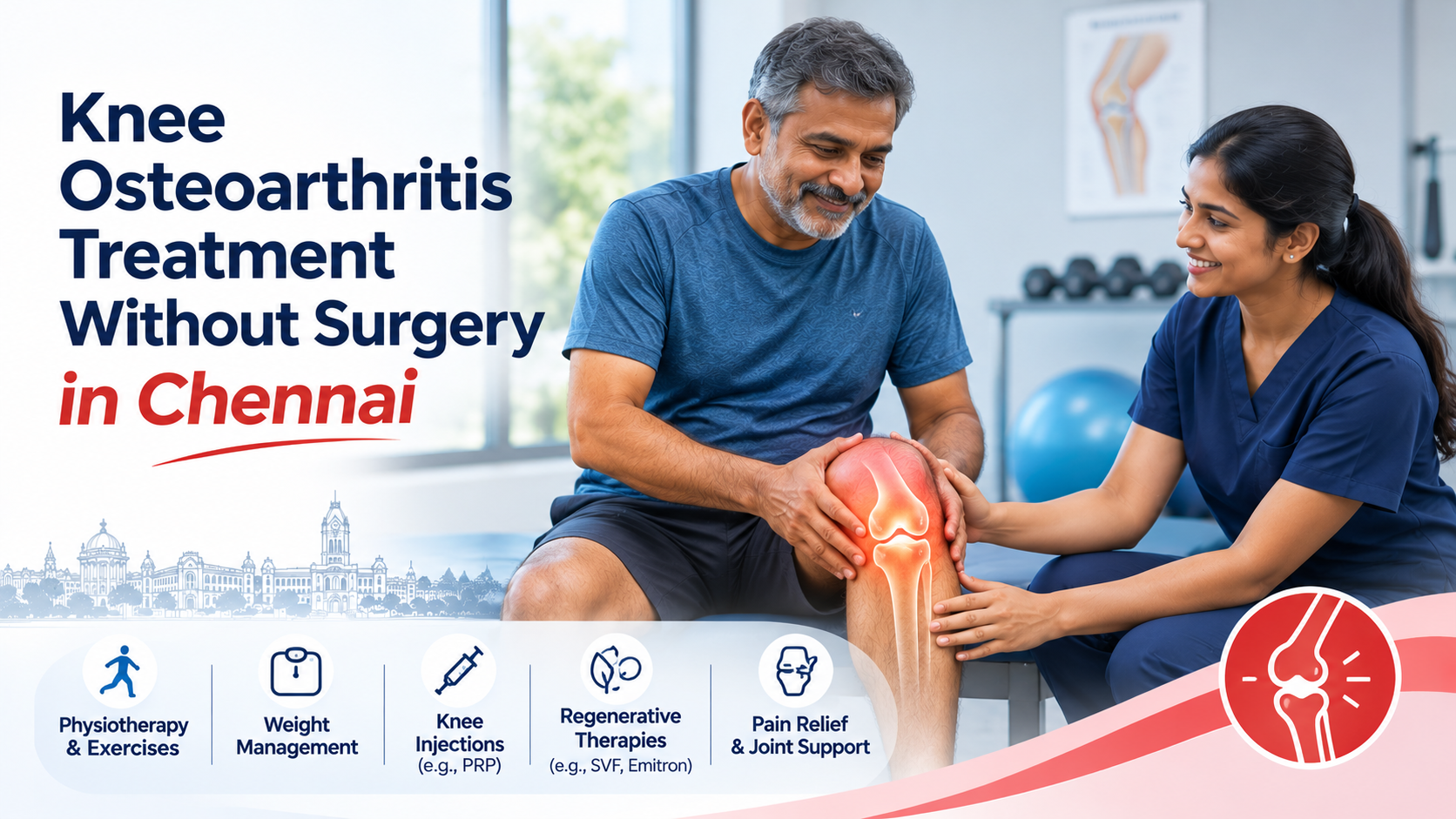
Stairs feel harder. Getting up from a chair takes an extra push. Your knee aches after a long walk. If this sounds familiar, you are not alone. Knee osteoarthritis is one of the most common reasons people in India slow down.
Surgery is not the only route. For many, especially in early and middle stages, a non-surgical approach can ease pain and keep you moving for years. This guide explains what those options look like in Chennai.
Osteoarthritis is wear and tear of the cartilage cushioning your bone ends. As cushioning thins, bones rub more, the joint becomes stiff and sore, and muscles weaken. It develops slowly. Age, injuries, excess weight and family history all play a part.
Osteoarthritis does not mean stopping activity. Staying active is one of the main ways to manage it.
Most doctors start with everyday measures that have the strongest evidence.
Strengthening exercises. Knee muscles, especially quadriceps, act like shock absorbers. Stronger muscles take load off the joint. Simple exercises like straight-leg raises, sit-to-stands and wall squats, done regularly under guidance, make a noticeable difference.
Physiotherapy. A physiotherapist designs a programme for your knee, posture and routine. They show you how to walk, climb stairs and get up with less strain.
Weight management. Even modest weight loss reduces knee load with every step. Diet changes and low-impact activities like walking, swimming or cycling are easier on the joint.
Footwear and walking aids. Supportive shoes, a walking stick on the opposite side, or a knee brace can reduce pain.
Pain relief, used wisely. Paracetamol or short courses of anti-inflammatory medicines may help. Long-term use needs doctor supervision due to stomach, kidney and heart risks.
When exercise and basic care are not enough, doctors may suggest knee injections. The choice depends on your symptoms, arthritis stage and overall health.
Corticosteroid injections calm inflammation and bring short-term relief over weeks to months. Hyaluronic acid injections support the joint's lubricating fluid. Platelet-rich plasma (PRP) and cell-based therapies are also being explored. Results vary, so have an honest conversation about what is realistic.
Oxymed Hospital offers regenerative options for chronic knee pain, including SVF therapy and Emitron-based treatment. These are not suitable for everyone. Your doctor will explain benefits, uncertainties and alternatives.
Non-surgical care does not work for everyone. When pain or damage is advanced, your doctor may discuss surgery. Even then, many try a non-surgical programme first.
Book an appointment if your knee is swollen, hot or red, you have fever with knee pain, the knee gives way or locks, you cannot put weight on it, or pain is worsening and disturbing sleep. These need prompt assessment.
Think of knee care as a plan over weeks and months, not a single fix. Start with: proper assessment and X-ray if needed, strengthening routine with a physiotherapist, weight and activity work, sensible pain relief, and regular doctor reviews. If not improving, your doctor can adjust the plan.
If knee pain is affecting your work, walks, prayers or family time, you do not have to wait. Oxymed Hospital provides orthopaedic and pain care in Chennai. Our team can help you understand which non-surgical options suit your arthritis stage. Learn more about our specialities or contact us to arrange a consultation.
Many have questions about cost, recovery time and what to expect. Our frequently asked questions cover these, and patient stories on our testimonials page share experiences. Learn about our medical team at our about page.
Knee osteoarthritis is a long-term condition, but it can be managed well. With the right care, many people keep walking, working and living the way they want to.
What non-surgical option will you explore first for your knee health?
This article is for general education and does not replace a consultation with a qualified doctor. Treatment decisions should always be made after a proper examination and discussion with your own doctor.