
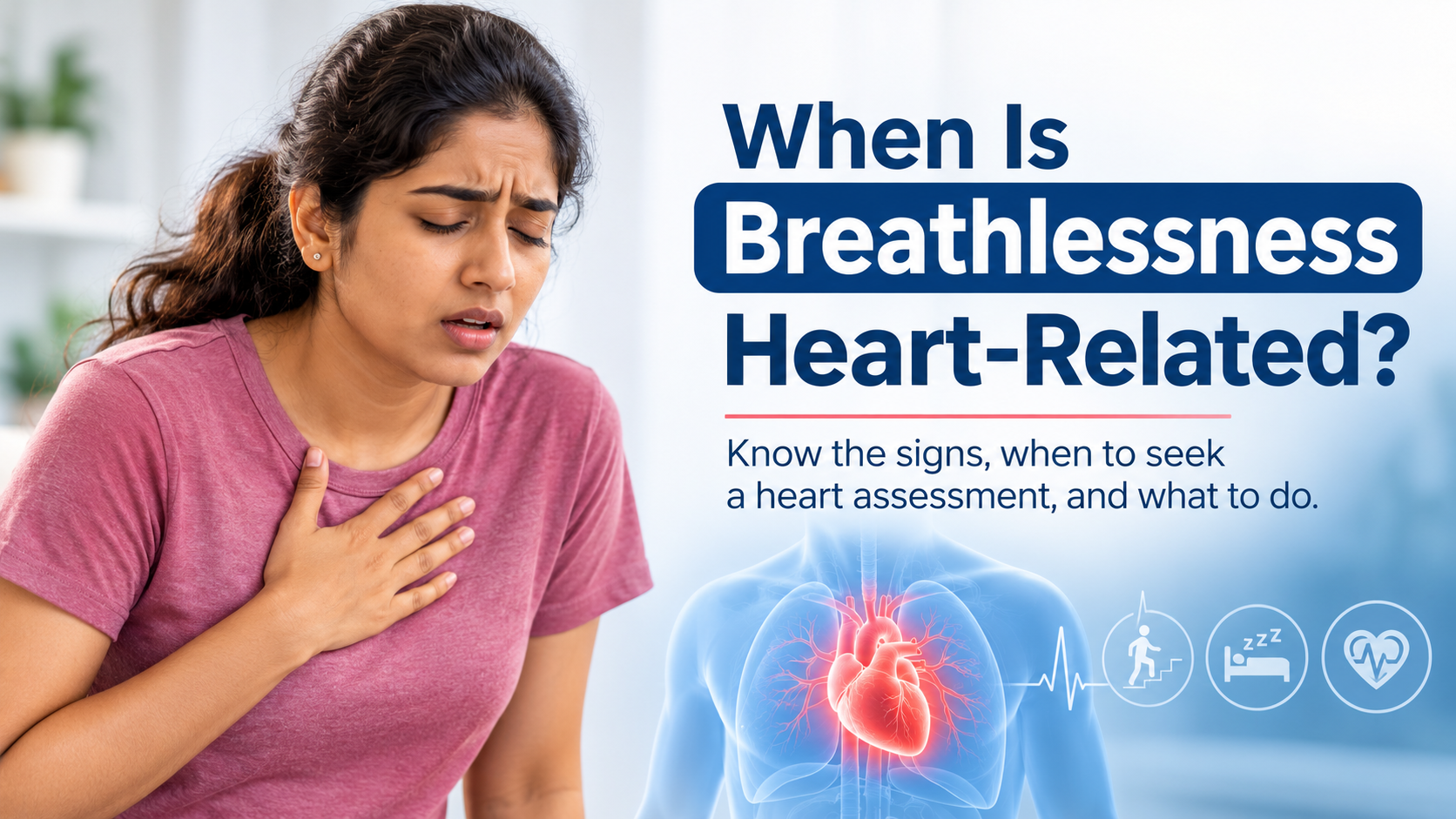
A flight of stairs that once felt manageable now leaves you pausing because of SOB (shortness of breath). This change may be attributed to age, weather, fitness, or a busy day. However, new, recurring, or worsening SOB warrants medical attention.
SOB can have many causes. Some involve the lungs, while others may relate to the heart or another health condition. It does not automatically mean that you have a heart problem, and symptoms alone cannot tell you the cause. A medical assessment can help work out what may be behind it. Oxymed's FAQs about chest discomfort and cardiac concerns explain how patients can get in touch about these concerns.
A heart condition can sometimes make it harder for the body to get the blood and oxygen it needs. SOB may happen during activity, with less effort than usual, or even while resting. Some people notice SOB when lying flat or may wake suddenly at night with SOB.
Pay attention to changes in your body. Ankle or leg swelling can have several causes, including some heart conditions, and is worth discussing with a healthcare professional. Swelling on its own does not confirm a heart condition, but sharing it can help guide an assessment. You can also view Oxymed's cardiology team and other specialists.
Consider speaking to a doctor if SOB is persistent, getting worse, or appearing during everyday activities that you previously managed comfortably. It is also worth seeking advice if SOB occurs when you lie down, wakes you from sleep, or comes with ankle or leg swelling or palpitations.
You do not need to wait for chest pain before asking for medical advice. A clinician can help decide whether the heart, lungs, or another cause needs to be checked. Avoid trying to diagnose yourself based on one symptom. If you would like to contact Oxymed, visit its appointment and contact page.
The doctor may ask when the SOB began, what brings it on, whether it is changing, and whether you have other symptoms or existing health conditions. They may check your pulse, blood pressure, breathing, and heart and lungs. Depending on what they find, tests may include an ECG, blood tests, a chest X-ray, or an echocardiogram. Not everyone needs every test; the assessment is guided by your symptoms and clinical findings.
Before your appointment, note when the SOB happens, how long it lasts, and what makes it better or worse. Bring a list of medicines and mention any other changes you have noticed. If you would like to learn more about Oxymed Hospital, visit its official website.
Get emergency help immediately if SOB becomes severe, you are gasping or unable to speak, or SOB comes with a tight or heavy chest, pain spreading to your arm, back, neck, or jaw, pale or bluish lips or skin, or sudden confusion. In India, call 112 for emergency assistance. Do not wait for a routine appointment when these symptoms occur.
Have you noticed SOB during everyday activities or when lying down, and what would you want to ask a cardiologist?
This article is for general information and does not replace medical assessment or emergency care.